
A valve, placed once. Switched when you choose.
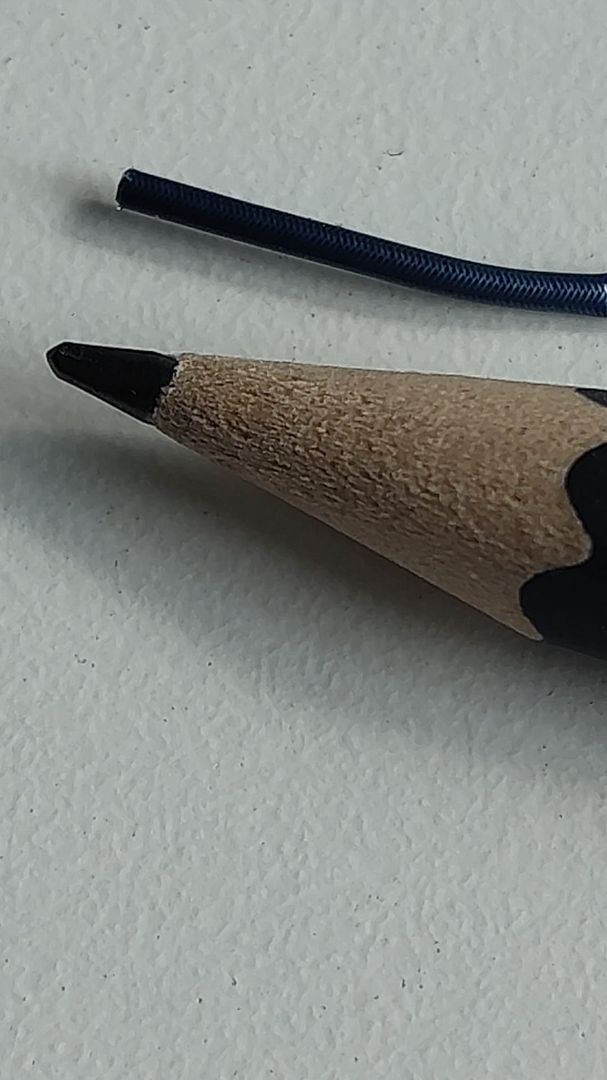
Choice is a mechanical valve inside a small stent. One is placed in each fallopian tube, where it meets the uterus.
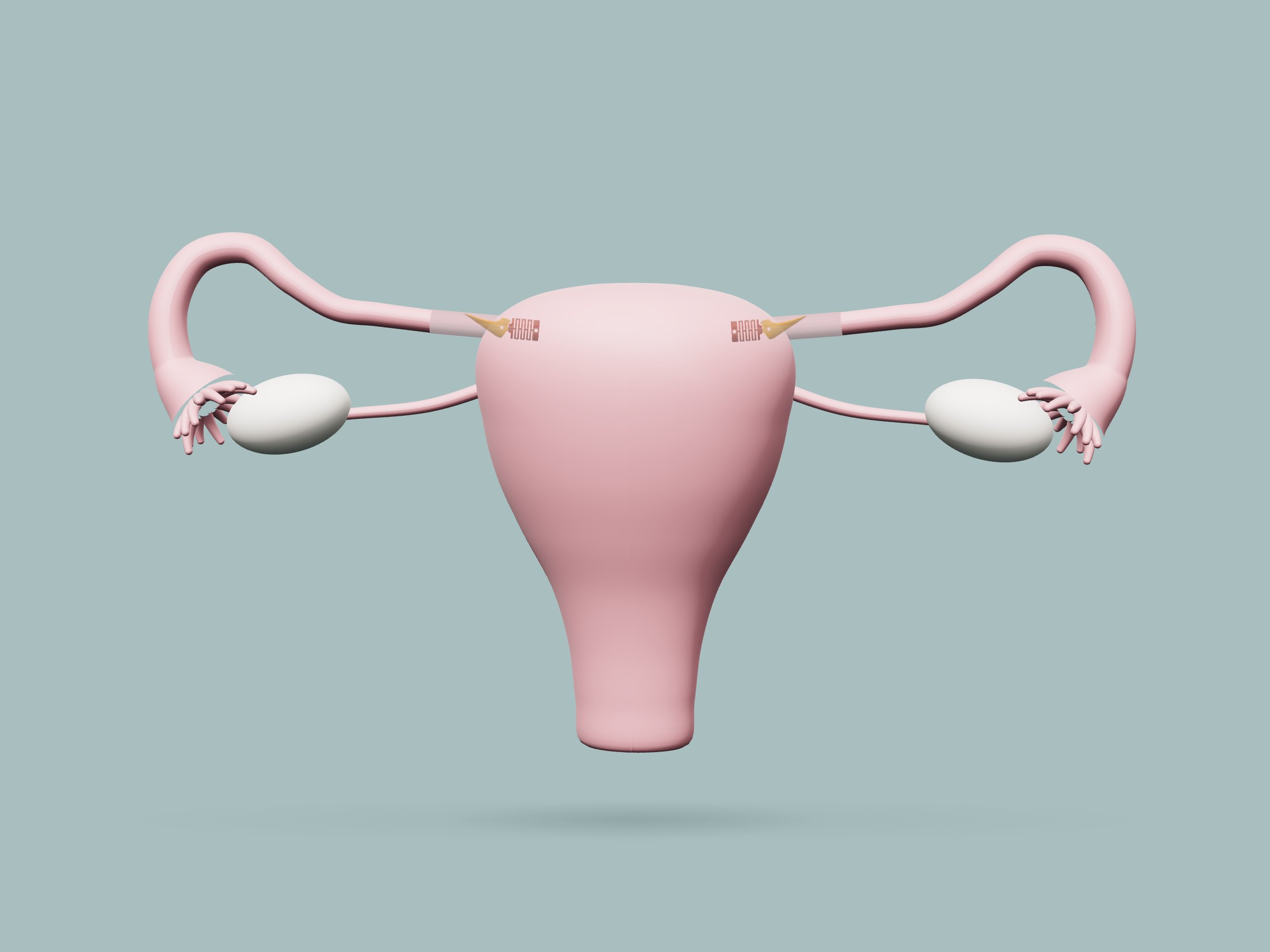 Choice valve
Uterus
Fallopian tube
Ovary
Choice valve
Uterus
Fallopian tube
Ovary
Through the cervix, under direct vision.
Choice is specifically designed to be placed and removed without pain, in an outpatient procedure and without incisions. Our own 1.2 mm endoscope lets the gynaecologist see inside the fallopian tube while placing the valve.
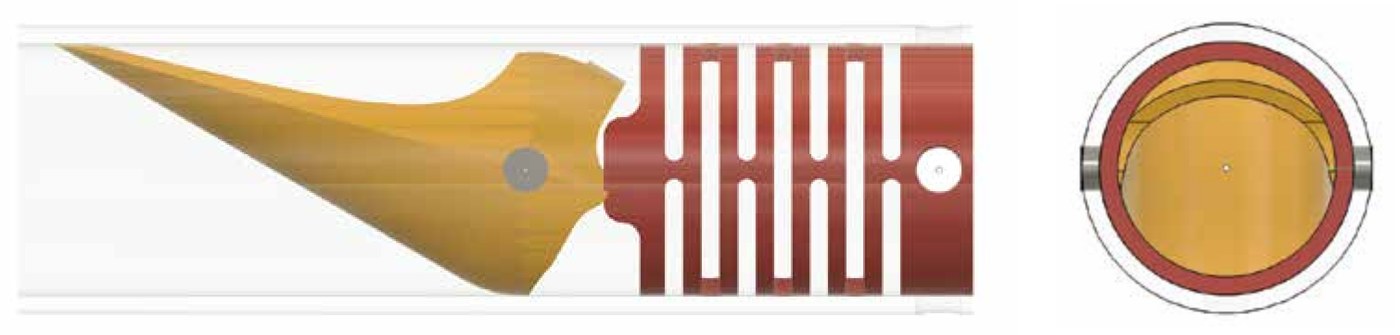
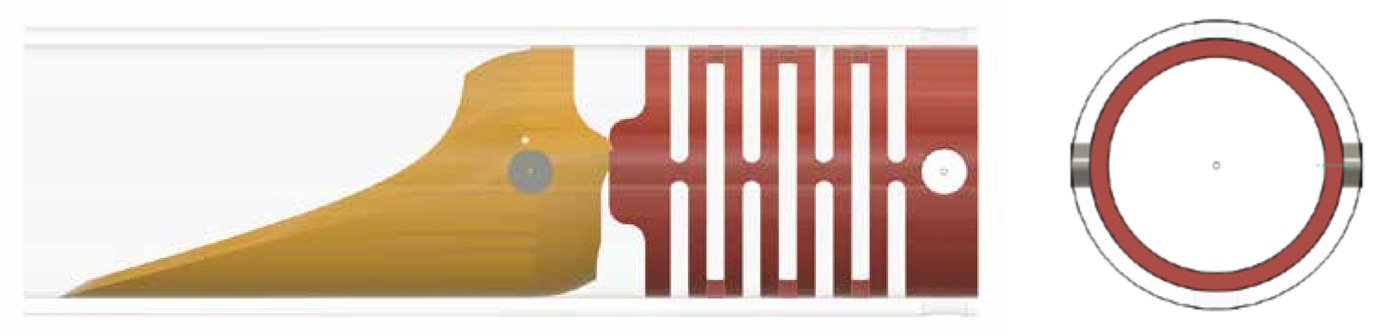
Open or closed, without power.
The valve is bistable: it stays open or closed without any energy. Closed, it is designed to keep sperm and egg apart. Open, the tube is designed to work as before.
Designed to be reversed.
The first version, Choice ONE, is switched with the same 1.2 mm endoscope used for placement, in a short outpatient procedure. A later version, Choice TWO, is being designed for wireless switching. Choice is also designed to be removable. Removal still has to be demonstrated in clinical studies.
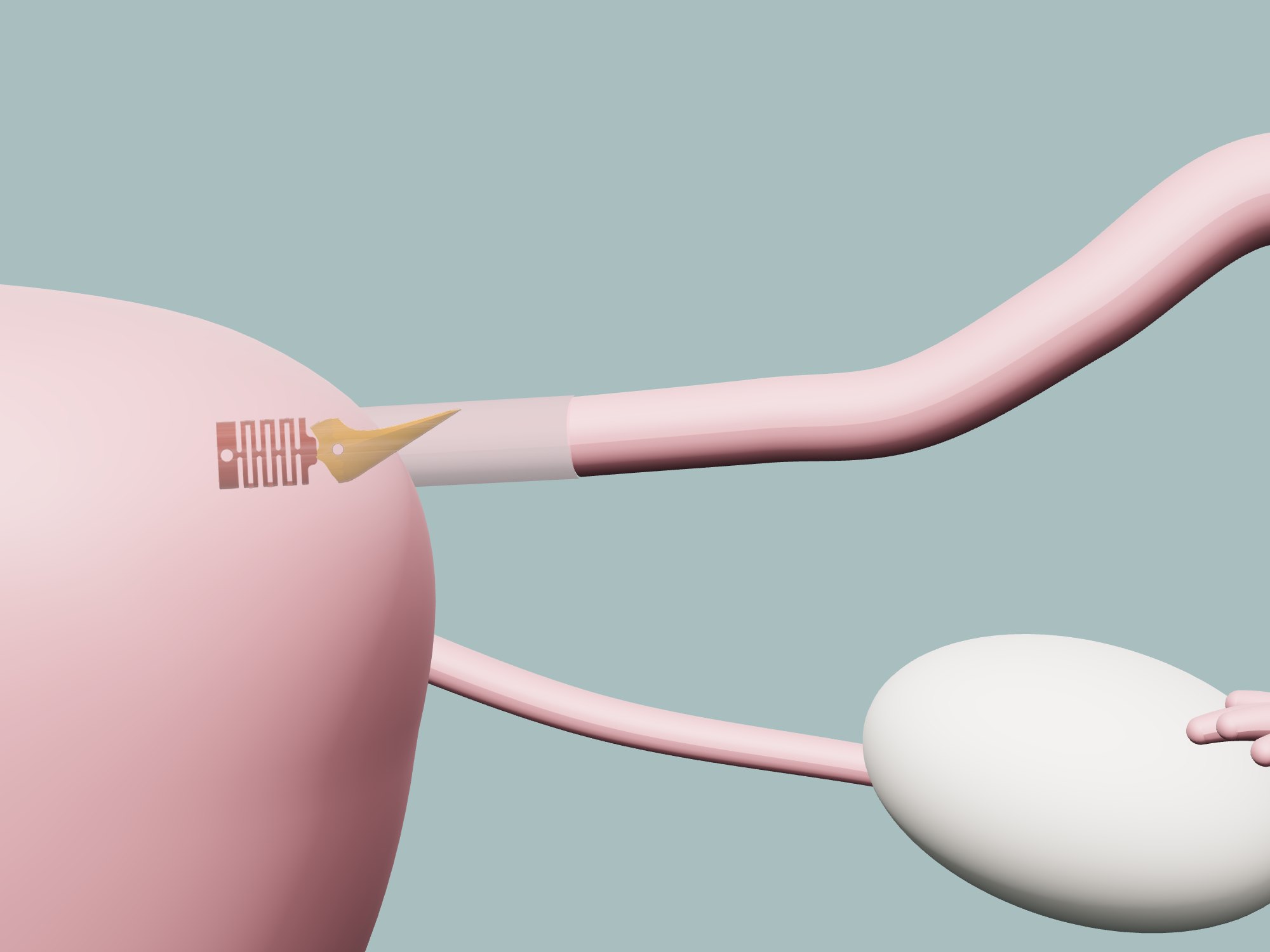
Choice ONE, in development.
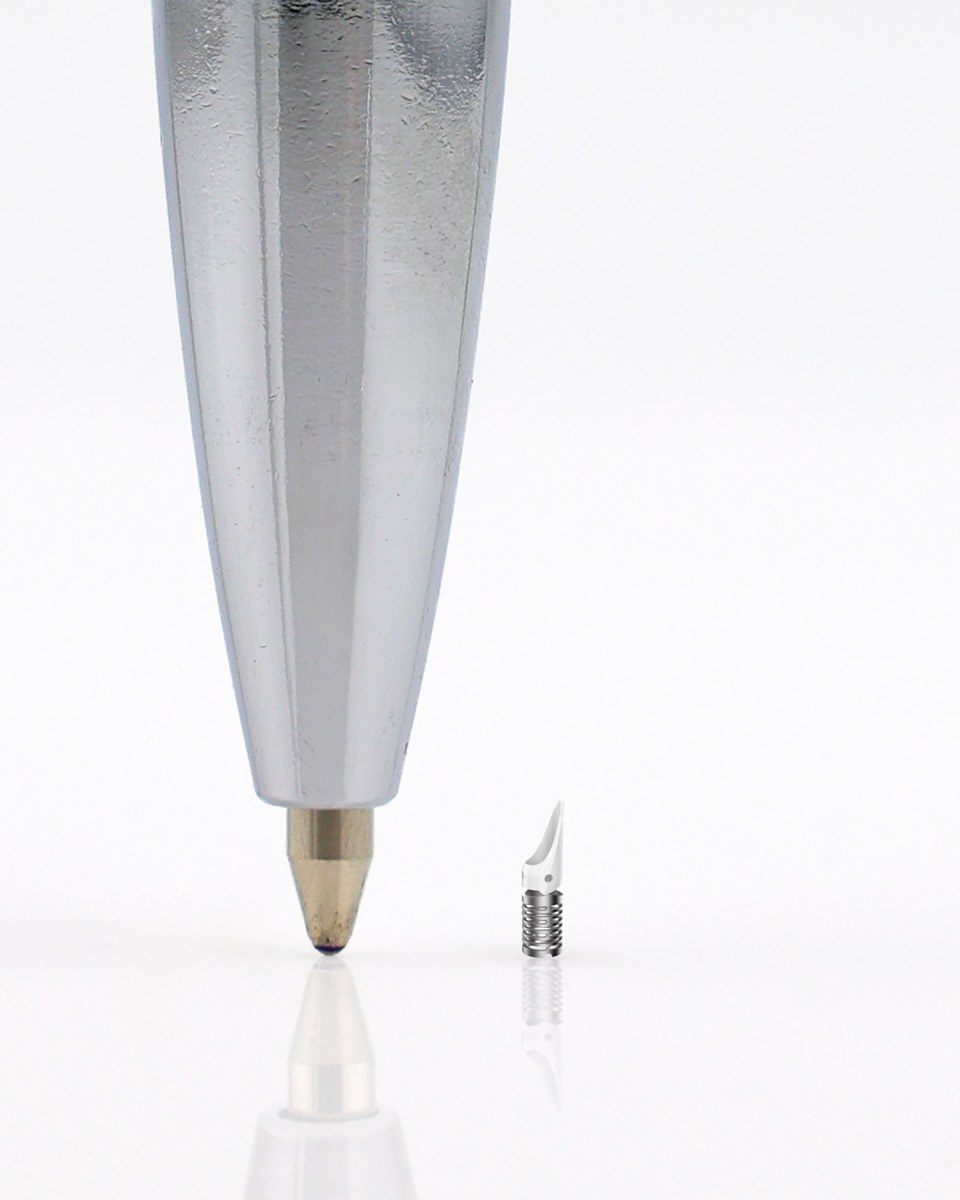
- Length
- About 15 mm
- Diameter
- 1.6 mm
- Materials
- Nitinol stent, ceramic housing. One metal.
- Actuation
- Bistable mechanism. Stays open or closed without power.
- Placement
- Endoscopic, outpatient, with a 1.2 mm endoscope.
- Switching
- Endoscopic, outpatient, with the same 1.2 mm endoscope (ONE). Wireless switching in design (TWO).
- Removal
- Designed to be removable without pain. To be demonstrated clinically.
- Status
- Investigational. Not approved for use.
Are you a gynaecologist or hysteroscopist?
We work with clinicians in the Netherlands, Europe and the US on study design and placement. We would like to hear from you.